Goals:
- Provide comprehensive training and support so new District Directors knew what was expected of them and how to do it
- Communicate current organizational challenges and opportunities
- Create structured touch points to foster collaboration between district directors and state and chapter leaders.
Portfolio: Communications Campaign
District Director Onboarding, Training, and Support
Client
Washington State Music Teachers Association
Project Duration
1 year
Objectives
Objective A: Onboarding
Create a central, accessible communication channel for District Directors to understand their main responsibilities, access forms and grant applications, understand how and when to fill them out, find meeting dates, and know who to turn to with questions.
Objective B: Training
Provide District Directors with event training and support
Objective C: Support
Increase collaboration between District Directors, state leadership, and chapter leaders so that all could share solutions to common challenges and increase engagement and community.
Context
District Directors serve as vital planners and organizers for chapters in each district. They help chapters work together to plan conferences; they facilitate district-wide Music Artistry Program events; and they assist in the selection process of district representatives to the State Conference Honors Recitals. In addition, District Directors identify chapters’ most pressing challenges and help find solutions, including areas that would benefit from state grants. They also encourage chapters to pursue non-traditional creative projects and outside-the-box membership retention and recruitment strategies. District Directors identify people with leadership skills who might be interested in serving as committee chairs for the Board of Directors or the Education Board, and contribute to the overall health of the Washington State Music Teachers organization by providing informed perspective, guidance, and strategic thought partnership on the WSMTA Board of Directors.
Challenge
Each district director was supposed to document their duties on paper, organize important materials in a notebook, and train their successors. Directors had often been too overwhelmed with their responsibilities to document what they did, failed to save or organize important materials, and then did not have time to train their successors. Furthermore, many district directors had no event planning experience themselves, did not understand how the national, state, district, and chapter leaders could collaborate together, or the overall challenges facing each level of the organization. Poor communication and training led to ineffective leadership, feelings of failure, and burnout as Directors struggled to understand and execute their responsibilities. Many district directors were not interested in serving in any capacity at the state or chapter level again after finishing their terms.
Objective A: Onboarding

Objective
Create a central, accessible communication channel for District Directors to understand their main responsibilities, access forms and grant applications, understand how and when to fill them out, find meeting dates, and know who to turn to with questions.
Audience
- Current District Directors
- Potential District Directors
- State Nominating Committee
- Majority age 55+
- Not tech savvy
Solution: District Director Dashboard
Design and build a District Director Dashboard as part of the members-only section of the WSMTA website.
Components
- Overview of purpose and responsibilities
- Meeting information
- Contact information for state, district, and chapter leaders
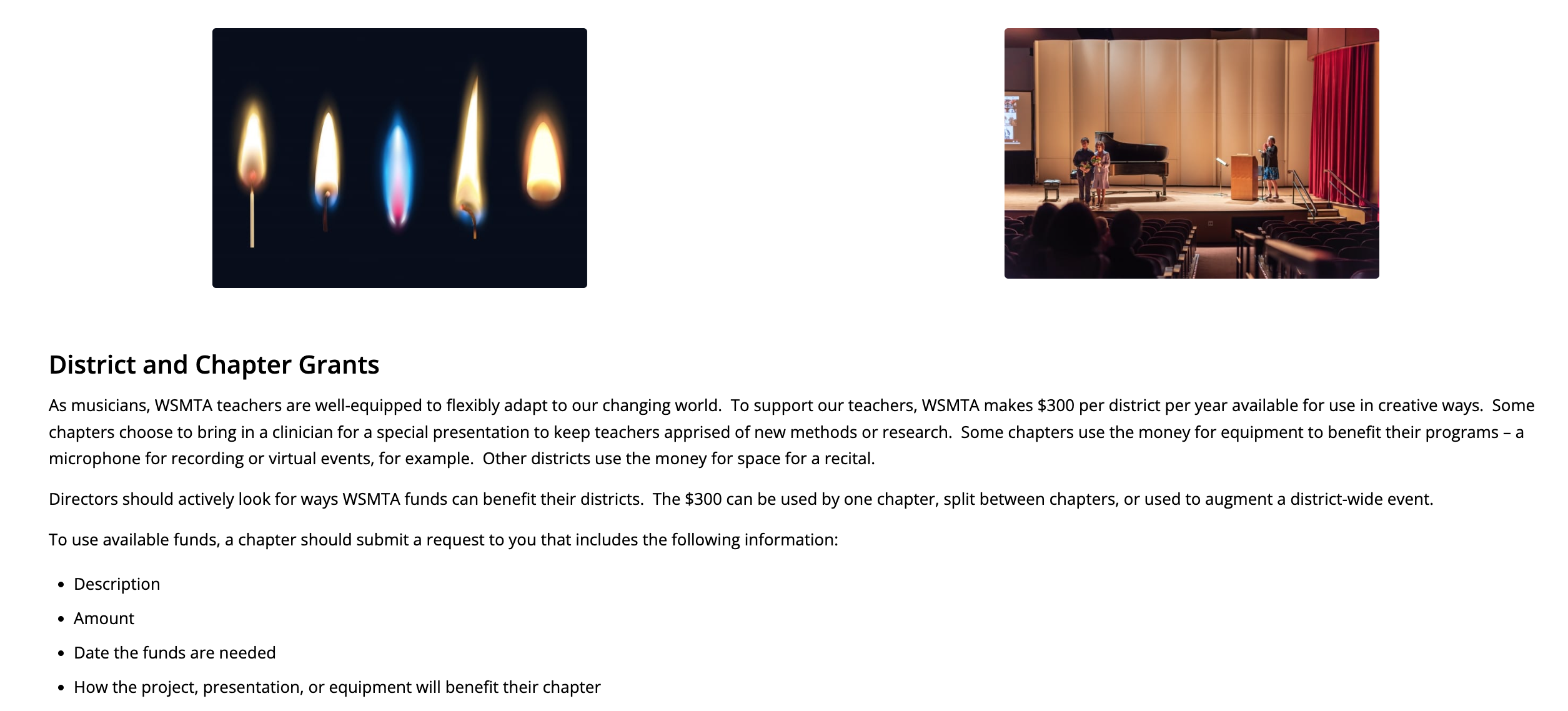
- District funds and reimbursable expenses
- Grant opportunities
- Possible and required events
- Forms, guides, and templates
Design
- Clear, straightforward language
- Calm color palette (blue, black, and white)
- Time sensitive information at the top
- Overview of the role at the top
- In sections broken up by images to follow brand guidelines
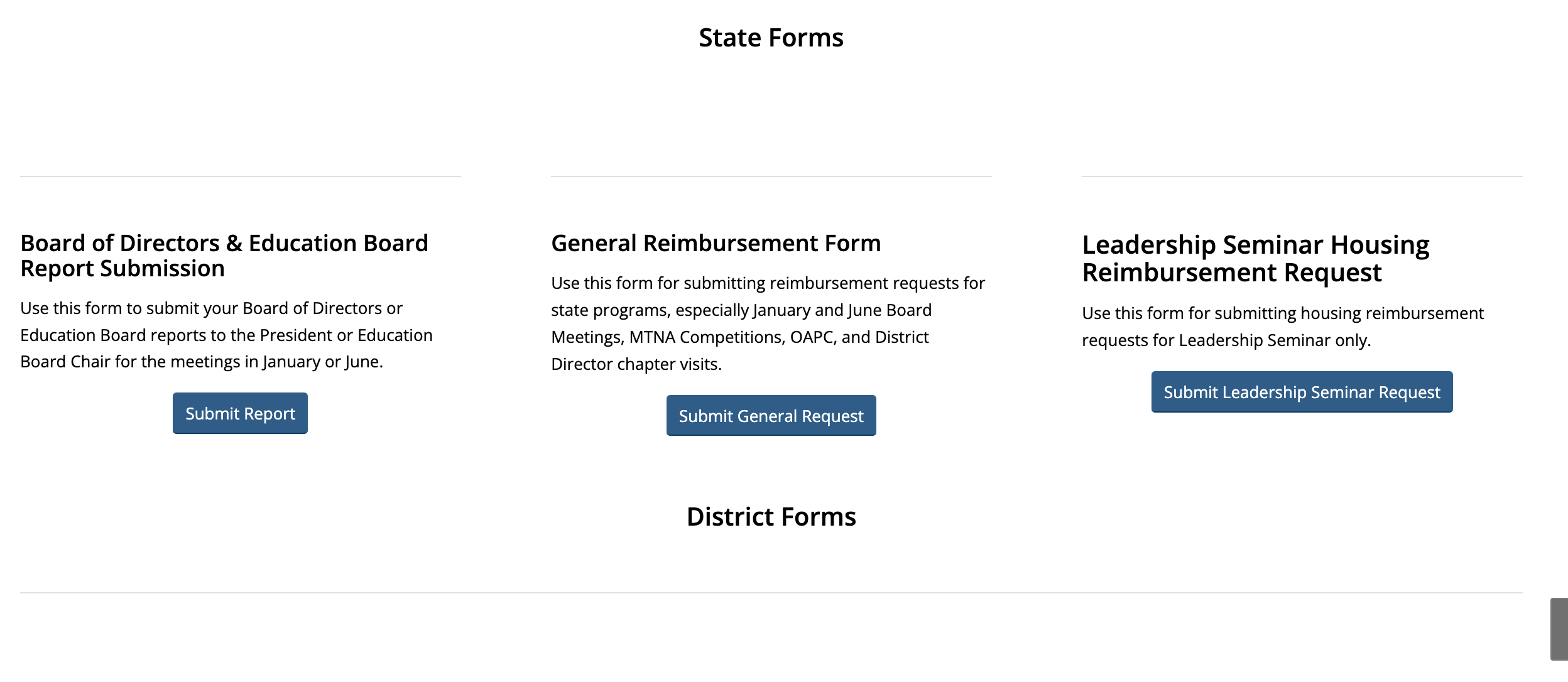
- Large buttons to link to important documents on other program pages
- Keep all forms as simple as possible
Preparation
Before creating the District Director Dashboard, I met with stakeholders including the WSMTA President, Treasurer, and Vice President to get their perspectives as former district directors and as current collaborators. I then reviewed and revised the grant applications processes, including converting paper forms to an online format. Following this, I gathered or created resources and wrote guides for each component to provide context, timelines, and clear directions.
Execution
I drafted the section architecture, built the pages, and tested each form. Executive leadership reviewed the section, including the guides and templates, and tested each form’s functionality. After incorporating their feedback, I sent the section to all the district directors. I asked for comments again after the election of new district directors and made UX revisions, including separate pages for forms.
Results
The new District Director Dashboard provided upfront information about responsibilities and timelines making it easier for current directors to find what they needed.
The nominating committee used the dashboard to easily recruit new district directors because candidates knew what was expected of them and the appropriate amount of time it would take to complete their tasks.
Directors filed forms on time for grants, vendor disbursements, personal reimbursements, and event insurance, easing oversight responsibilities for other executive leaders.
A clear understanding of guidelines and increased communication between district and chapter leaders led to an increase of 57% in grant awards, fulfilling the overall WSMTA mission to advance music knowledge and education.
Objective B: Training
Objective
Provide District Directors with event training and support
Audience
- Current District Directors
- Executive WSMTA Leadership
- Majority age 55+
- Not tech savvy
Objective C:
Increase collaboration between District Directors, state leadership, and chapter leaders so that all could share solutions to common challenges and increase engagement and community.

District I & II Conference Landing Page
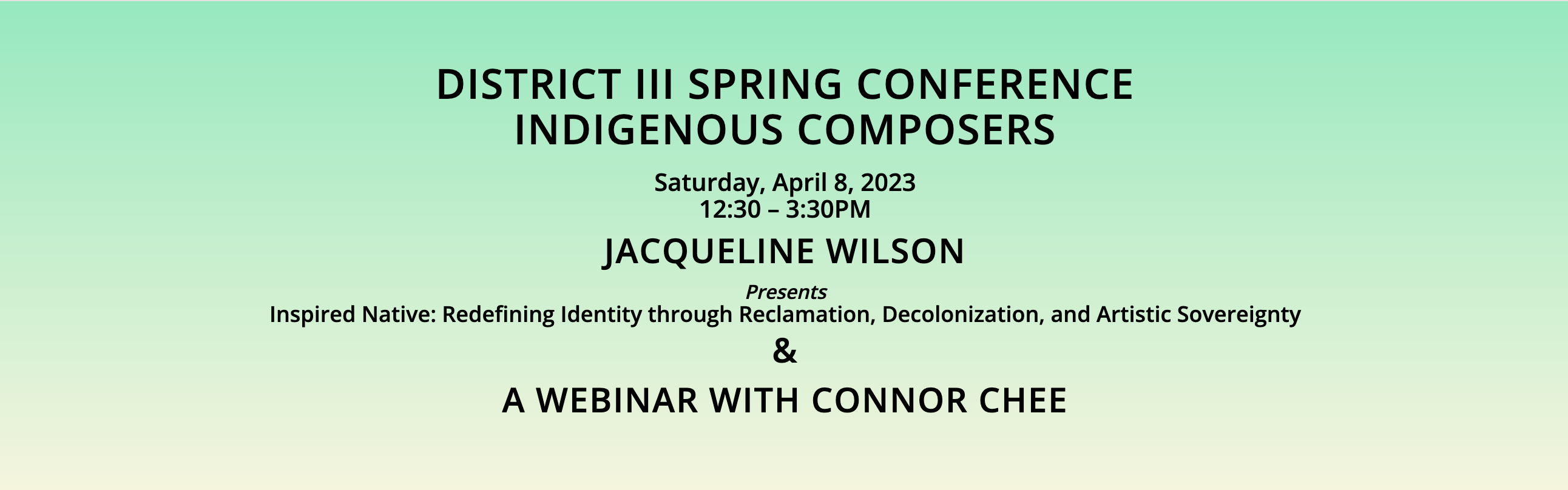
District III Conference Landing Page
District VI Conference Landing Page
Solution: Event Training and Ongoing Support
The biggest challenge for incoming district directors was planning the biennial district conferences. Most had not planned an event of that scale before, had no experience with marketing, did not understand the budget requirements of the state grant application, had trouble delegating tasks, and needed extra help with virtual and hybrid technology.
Components
- Printable Conference Planning Guide
- Online registration process
- Template vendor contracts
- Template budget
- Template grant application
- Event insurance instructions
- Contact lists of relevant chapter leaders
- Preparation meetings with executive leadership
- Personal training on hybrid/virtual platforms
Preparation
I discussed challenges around the conference planning process with District Directors, and the WSMTA Treasurer. Directors asked for support with online registration payments, a better web presence for their conferences, marketing, budgets, and grants.
I then reviewed the snail mail district conference registration forms and the funds distribution process for directors and vendors. All leaders agreed that an ideal process would allow the WSMTA Treasurer to pay most expenses directly, rather than requiring directors to wait for reimbursement.
The pandemic required district conferences to proceed virtually. I researched which platforms would provide the most efficient, cost-effective solution for directors across the state and provided a report to the directors detailing several options.
Execution
I created the District Conference Planning Guide, gathered, adapted or created templates for budgets, contracts, grant applications, and sample emails. I added these resources to the District Director Dashboard. Executive leadership reviewed the resources, including the guides and templates, and tested each form’s functionality.
I set up several touch points throughout the year to remind district directors about the available resources. These included:
- An article in the state newsletter
- Group emails
- Personal emails to each director
- Announcements at each board meeting
- Short lecture at the Leadership Seminar
- Agenda item during the District Director meeting at the state conference
At the beginning of each program year, I held a planning meeting (or two or three) with each district director to go over the conference planning process, their specific conference platform needs, gather the details required for creating the online component of their conferences, and provide training on any tech as necessary. I also provided directors with WSMTA brand guidelines and appropriate logos and fonts.
Results
Better training on events planning and web support allowed district conferences to continue throughout the pandemic, and strengthened ties between individual teachers, chapters and districts. Directors felt equipped for success and knew who to ask for help when they struggled. Three district directors signed up for a second term, and one chose to serve on the Education Board.
Because I built a public landing page for each district conference, members and potential members knew what other districts were doing. Because many districts chose to use a virtual or hybrid format, teachers from the entire Northwest region benefitted from the conferences.
Because I designed and built an online registration system for each district conference:
- Attendance across all seven District Conferences stayed the same or increased throughout the pandemic
- Attendees registered quickly, instead of mailing checks
- Each attendee automatically received confirmation of their registration including appropriate directions, tickets, handouts, and passwords increasing member satisfaction
- District directors had all contact information easily accessible
- Demographic information was captured for future planning
Ongoing
I used a clean, flexible design in my template page for District Conferences, and was able to adapt the design for both a public facing landing and registration page, and an attendee-only landing page that included: handouts, a livestream and chat, after-conference access to video material, directions, the photo and bio of the presenter(s), any sponsors, and contact info for questions. was able to reuse them.
Objective C: Support

Objective C
Increase collaboration between District Directors, state leadership, and chapter leaders so that all could share solutions to common challenges and increase engagement and community.
Audience
- Current District Directors
- Chapter Presidents
- Executive WSMTA Leadership
- Majority age 55+
- Not tech savvy
Solution: Collaboration and Shared Resources
Because teaching music requires long hours, often during evenings and weekends, finding community support with other music teachers is a key component of membership in WSMTA. This is even more true for chapter, district, and state leaders, who devote hours to association programs. Many chapters and districts face similar challenges including: member retention and recruiting, venue availability, adjudicator selection, communication and marketing strategy, and program execution.
Components
- Guide for District Director when visiting Chapters
- Contact lists of relevant chapter leaders
- Preparation meetings with executive leadership
- Dedicated meeting time for chapter presidents and chapter presidents and district directors together
Preparation
I reached out to current and past district directors and discussed challenges around forming strong partnerships with chapter leaders. Barriers included:
- Lack of time
- Lack of clarity around role expectations
- Lack of structure in chapter visits
- Lack of structure in meetings with chapter presidents
- Chapter leaders not attending meetings
Execution
All agreed that adding structure to existing meetings was the best first step. From here I made four suggestions:
- Create a Chapter Meeting Guide for District Directors
- Continue the large meetings at the annual state conference (chapter presidents all together, district directors all together, each director with their respective chapter presidents) and add those three meetings to the fall leadership seminar
- Appoint a meeting lead well in advance of all large meetings
- Task the meeting leads with creating agendas for each meeting
After placing the guide on the District Director Dashboard, I set up several touch points throughout the year to remind district directors about the meetings with their chapter presidents at the state conference and leadership seminar. These included:
- An article in the state newsletter
- Group emails
- Announcements at each board meeting
- Conference schedule on the website
- Conference schedule in the booklet
- Agenda item during the board of directors meeting at the state conference and at the leadership seminar
Results
District Directors had time to confer together about approaches to District Conferences that worked, and to collaborate on a new approach to sharing resources. They created a shared Google Drive and digitize all the useful materials they had so they could share them with each other, and easily pass them on to new directors without having to drive physical boxes around. Shared information included venue contact and communication for recitals, potential leaders, requirements for non-profits, and volunteers for conferences.
Chapter leaders had time to discuss and absorb changes to long standing programs, including the move of the Music Literacy Program materials and registration to an online format. This proved to be crucial to the successful implementation of the program. Chapters who had been successful were able to connect with chapters who had been less successful, and across the state, receipts were up 75% for MLP over pre-pandemic totals in 2018 – 2019, and the highest they had been in the past ten years.
 Carrie Purcell Kahler